
About C.itp ANJORIN, Ishaq O. Muhsin
Technology Executive | Artificial Intelligence Researcher | Cybersecurity & IT Governance Leader | Digital Transformation Strategist | Enterprise Architect | Innovation & Technology Commercialisation Advocate
I am ANJORIN, Ishaq O. Muhsin, a technology executive, artificial intelligence researcher, cybersecurity professional, and digital transformation strategist dedicated to advancing innovation that delivers measurable impact for organizations, industries, and society. Throughout my professional journey, I have been driven by a clear conviction: technology is most valuable when it extends beyond technical implementation to solve complex societal challenges, improve decision-making, strengthen institutions, and create sustainable opportunities for economic and human development.
With nearly two decades of professional experience spanning executive leadership, enterprise information technology, software engineering, cybersecurity, artificial intelligence, higher education, and research, I have cultivated a multidisciplinary perspective that enables me to bridge the traditional divide between academia and industry. My work combines scientific inquiry with practical implementation, allowing emerging technologies to move beyond theoretical concepts into intelligent, secure, and scalable solutions that address real-world needs.
My commitment to innovation has been recognised through several national and international achievements that reflect the impact of my work across research, cybersecurity, and technology commercialization. These include being named an MSA Cyber Warrior – Malaysia’s Next Generation (2026) by Melbourne Security Associates for contributions to cybersecurity programme development and information security awareness; receiving the Startup Induction Grant (SIG) 2026 Acceleration Grant from Universiti Brunei Darussalam for the commercialization of FEVAL-AI, an AI-powered feasibility and valuation platform; and leading the development of RAHMAH: An Anonymous Mental Health Chatbot Empowered by Islamic Psychology, which received the Gold Award at the Festival of Ideas 2025 organised by the International Islamic University Malaysia.
My career has been shaped by continuous learning, strategic leadership, and a commitment to innovation. From designing enterprise technology infrastructures and leading digital transformation initiatives to conducting advanced research in artificial intelligence and medical imaging, I have consistently pursued opportunities where technology can create lasting value. This integrated perspective enables me to understand not only how technologies function but also how they influence organizations, public services, education, healthcare, and national development.
Today, I serve as the Chief Information Officer (CIO) at Dervac, where I provide strategic leadership for enterprise technology, cybersecurity, digital transformation, software innovation, and organizational technology governance. In this role, I work closely with executive management, technical teams, and stakeholders to align technology investments with organizational objectives, ensuring that digital initiatives deliver measurable business value while maintaining security, resilience, and operational excellence.
My leadership extends beyond managing information technology infrastructure. It encompasses the design of enterprise digital strategies, the development of intelligent software solutions, the implementation of cloud-enabled architectures, and the integration of artificial intelligence into business processes. By combining strategic planning with technical execution, I help organizations modernize their operations, improve service delivery, strengthen cybersecurity posture, and build sustainable digital capabilities for long-term growth.
Throughout my career, I have led and contributed to projects involving enterprise software development, intelligent automation, cloud infrastructure, cybersecurity governance, educational technology, digital assessment systems, systems integration, business process optimization, and emerging AI applications. These experiences have strengthened my belief that successful digital transformation requires more than technological expertise—it demands strategic leadership, effective governance, interdisciplinary collaboration, and a deep understanding of organizational change.
Alongside my executive responsibilities, I remain deeply engaged in academic research and technological innovation. I am currently pursuing a Doctor of Philosophy (Ph.D.) in Computer Science and Information Technology at the International Islamic University Malaysia (IIUM), where my research focuses on advancing artificial intelligence for healthcare through the development of robust and anatomically consistent deep learning frameworks for the automatic segmentation of periapical lesions in Cone Beam Computed Tomography (CBCT) images under limited-data conditions.
This research addresses one of the most significant challenges in medical artificial intelligence: developing reliable deep learning systems that maintain high levels of accuracy despite limited annotated clinical datasets. By integrating optimization strategies, anatomical constraints, explainable artificial intelligence, and computer vision, my work seeks to improve the reliability, robustness, and clinical applicability of AI-assisted diagnostic systems. Ultimately, this research contributes to safer, more trustworthy, and clinically meaningful applications of artificial intelligence in healthcare.
My academic pursuits complement rather than compete with my industry experience. The challenges encountered in enterprise environments frequently inspire new research questions, while scientific discoveries provide innovative solutions to practical organizational problems. This reciprocal relationship between research and practice has become a defining characteristic of my professional identity and continues to shape my contributions across both domains.
Beyond my doctoral research, I actively participate in interdisciplinary collaborations involving artificial intelligence, cybersecurity, enterprise computing, digital transformation, intelligent systems, and technology innovation. I view research not as an isolated academic exercise but as a catalyst for solving complex industrial and societal challenges through evidence-based innovation. My objective is to contribute knowledge that advances scientific understanding while simultaneously producing technologies capable of improving healthcare, education, public administration, business operations, and digital governance.
Over the years, I have also remained committed to advancing professional knowledge through scholarly engagement, technical mentoring, curriculum development, conference participation, and collaborative research initiatives. I believe that meaningful innovation emerges when knowledge is shared across disciplines, institutions, and industries, enabling diverse perspectives to shape more effective and responsible technological solutions.
My professional philosophy is founded on the principle that technology should be human-centred, trustworthy, secure, and socially responsible. While rapid advances in artificial intelligence, cloud computing, automation, and digital platforms continue to redefine every sector of society, sustainable progress depends on ensuring that these technologies remain aligned with ethical values, organizational goals, and public interests. For this reason, my work consistently emphasizes responsible AI, cybersecurity, transparency, governance, and the practical implications of emerging technologies.
Rather than viewing artificial intelligence solely as an automation tool, I see it as an enabler of better decision-making, scientific discovery, operational excellence, and societal progress. Likewise, cybersecurity extends beyond protecting information systems—it forms the foundation of digital trust, organizational resilience, and sustainable innovation. Digital transformation, in my perspective, is not merely about adopting new technologies; it is about reimagining how organizations create value, empower people, and respond effectively to an increasingly interconnected world.
These principles have guided my professional journey across executive leadership, research, innovation, and technology strategy. Whether leading enterprise technology initiatives, designing intelligent software platforms, conducting advanced AI research, or collaborating with multidisciplinary teams, my focus remains consistent: developing technology that is practical, scalable, ethical, and capable of delivering meaningful and lasting impact.
Professional Philosophy
I believe the greatest innovations emerge where research excellence meets practical implementation. Throughout my career, I have intentionally positioned myself at this intersection, connecting scientific inquiry with enterprise practice to transform emerging technologies into solutions that address real-world challenges.
Technology should never exist for its own sake. Its true value lies in its ability to improve lives, strengthen institutions, enhance decision-making, and create sustainable opportunities for communities and nations. Every technological investment, research initiative, and innovation project should therefore be evaluated not only by its technical sophistication but also by its societal relevance, ethical responsibility, and long-term impact.
This philosophy continues to shape my work as an executive leader, researcher, and technology strategist. Whether developing artificial intelligence for medical imaging, strengthening cybersecurity resilience, leading enterprise digital transformation, or designing intelligent software platforms, my objective remains the same: to bridge knowledge and practice through innovation that is secure, trustworthy, inclusive, and impactful.
Industry Leadership
My professional career has been defined by a commitment to helping organizations harness technology as a strategic driver of innovation, operational excellence, and sustainable growth. Rather than viewing information technology as a support function, I have consistently advocated for its role as a catalyst for organizational transformation, enabling institutions to respond effectively to evolving business demands, emerging technologies, and an increasingly digital economy.
Over the years, I have worked across diverse sectors, contributing to enterprise technology initiatives that integrate strategic planning with practical implementation. My experience spans enterprise architecture, software engineering, artificial intelligence, cybersecurity, cloud computing, digital transformation, IT governance, educational technology, and technology consulting. This multidisciplinary background enables me to approach complex challenges from both technical and strategic perspectives, ensuring that technology investments deliver measurable organizational value.
As Chief Information Officer (CIO) at Dervac, I lead the development and execution of enterprise technology strategies that align digital innovation with organizational objectives. My responsibilities extend beyond managing infrastructure and information systems to shaping the organization’s long-term technology vision, driving innovation, strengthening cybersecurity resilience, and fostering a culture of continuous improvement.
Working closely with executive leadership, business stakeholders, and technical teams, I oversee initiatives that modernize digital operations, optimize business processes, and improve service delivery through intelligent technologies. This includes evaluating emerging technologies, defining enterprise architecture standards, implementing secure digital platforms, and ensuring that technology decisions support both immediate operational needs and long-term strategic priorities.
A central aspect of my leadership involves guiding organizations through digital transformation. Successful transformation is not simply about introducing new technologies; it requires rethinking business processes, organizational culture, governance structures, and decision-making frameworks. My approach emphasizes technology adoption that is purposeful, scalable, secure, and aligned with organizational goals.
Throughout my career, I have designed and supervised the development of enterprise software solutions that address operational inefficiencies, automate business workflows, and improve organizational productivity. These projects have ranged from web-based information systems and cloud-enabled enterprise applications to intelligent automation platforms and customized digital solutions tailored to specific institutional requirements.
My software engineering experience encompasses the complete software development lifecycle—from requirements analysis and system architecture to implementation, testing, deployment, integration, and long-term maintenance. By combining sound engineering principles with user-centred design and modern development practices, I strive to deliver software solutions that are reliable, maintainable, scalable, and capable of adapting to changing organizational needs.
Artificial intelligence has become an increasingly important component of my professional work. Beyond academic research, I actively explore the application of AI technologies to solve practical business and organizational challenges. My work includes the development of AI-assisted systems, intelligent automation solutions, predictive analytics tools, decision-support platforms, and data-driven applications that improve operational efficiency and enhance strategic decision-making.
I am particularly interested in the responsible adoption of artificial intelligence within enterprise environments. While AI presents unprecedented opportunities for automation and innovation, organizations must also address issues relating to transparency, governance, explainability, privacy, fairness, and security. My approach therefore integrates technical innovation with responsible AI principles, ensuring that intelligent systems remain trustworthy, accountable, and aligned with organizational objectives.
Cybersecurity has remained a foundational pillar throughout my professional journey. As organizations become increasingly dependent on digital technologies, cybersecurity is no longer solely a technical concern; it has evolved into a strategic business imperative that underpins organizational resilience and public trust.
My work in cybersecurity focuses on developing comprehensive security strategies that combine governance, risk management, security architecture, compliance, policy development, awareness, and operational resilience. Rather than relying exclusively on technical controls, I advocate a holistic approach that recognizes cybersecurity as an organizational responsibility requiring collaboration across leadership, technology, and business functions.
I have contributed to initiatives involving information security governance, cyber risk assessment, infrastructure security, identity and access management, network security, secure system design, business continuity planning, and organizational cyber resilience. These experiences have reinforced my belief that effective cybersecurity is achieved through a balanced combination of people, processes, technology, and governance.
My contributions to cybersecurity extend beyond enterprise implementation into professional capacity development and security awareness. In recognition of my work in advancing cybersecurity education and executive awareness, I was honoured as an MSA Cyber Warrior – Malaysia’s Next Generation (2026) by Melbourne Security Associates, Malaysia. The recognition acknowledged my contribution to the design and delivery of the Personal Information Security Management Programme (PISMP), a strategic cybersecurity awareness programme developed to strengthen organizational cyber resilience, promote information security best practices, and enhance executive engagement in cybersecurity governance. This recognition reflects my commitment to fostering a culture of digital trust where technology, people, and governance work together to strengthen organizational resilience.
Cloud computing and enterprise infrastructure modernization have also been central to my professional practice. I have participated in the planning, deployment, and management of scalable cloud-enabled environments that improve operational flexibility, business continuity, resource utilization, and digital service delivery. My experience includes designing resilient infrastructure architectures that support enterprise applications while maintaining security, availability, and performance.
In addition to enterprise infrastructure, I have extensive experience in systems integration and digital ecosystem development. Modern organizations rarely operate within isolated technology environments. Instead, they require interconnected platforms capable of exchanging information securely and efficiently across departments, applications, and external stakeholders. My work has therefore emphasized interoperability, data integration, API-driven architectures, and seamless digital experiences that support informed decision-making.
Educational technology represents another area in which I have contributed significantly. Recognizing the transformative role of digital technologies in learning, I have participated in the development and deployment of technology-enabled educational environments, including learning management systems, computer-based testing platforms, digital assessment solutions, academic information systems, and online learning technologies. These initiatives have supported institutions in improving educational delivery while expanding access to quality learning experiences.
Beyond technical implementation, I have been actively involved in technology consulting and strategic advisory services. Organizations often face complex decisions regarding technology investment, digital modernization, cybersecurity readiness, enterprise architecture, and innovation strategy. My role has frequently involved helping institutional leaders evaluate technological opportunities, identify organizational risks, define digital roadmaps, and develop practical strategies for long-term digital transformation.
One of the defining characteristics of my leadership style is the ability to translate complex technical concepts into strategic business language. Effective technology leadership requires more than technical expertise; it requires communicating technological possibilities in ways that enable executives, policymakers, educators, healthcare professionals, and other stakeholders to make informed decisions. Throughout my career, I have served as a bridge between technical teams and organizational leadership, ensuring that technology initiatives remain aligned with institutional priorities.
Innovation has consistently been at the centre of my professional work. I believe organizations must cultivate environments where experimentation, continuous learning, and evidence-based decision-making are encouraged. This mindset has influenced my approach to technology leadership, where emerging technologies such as artificial intelligence, automation, cloud computing, advanced analytics, and intelligent decision-support systems are explored not because they are novel, but because they have the potential to create measurable organizational value.
This innovation-driven philosophy has also shaped my involvement in technology entrepreneurship and commercialization. I have contributed to the conceptualization and development of intelligent digital platforms designed to address practical challenges faced by businesses, educational institutions, and public-sector organizations. These initiatives reflect my broader commitment to ensuring that technological innovation extends beyond research laboratories into solutions capable of generating economic, social, and institutional impact.
Throughout my executive career, I have learned that sustainable digital transformation depends as much on leadership as it does on technology. Successful organizations require leaders who understand both technological complexity and organizational dynamics, who can balance innovation with governance, and who can guide institutions through continuous change while maintaining resilience and strategic focus.
My experience across enterprise technology, cybersecurity, artificial intelligence, software engineering, cloud computing, and digital transformation has reinforced the importance of adopting an integrated approach to technology leadership—one that combines strategic vision, technical excellence, ethical responsibility, and collaborative innovation. These principles continue to guide my work as I support organizations in navigating an increasingly digital, interconnected, and technology-driven future.
Academic Leadership & Research
My academic journey reflects a commitment to advancing knowledge through research that addresses real-world challenges. Rather than viewing academia and industry as separate domains, I have intentionally built my career around integrating both, ensuring that scientific discovery informs practical innovation while industry challenges inspire meaningful research. This scholar-practitioner approach enables me to contribute not only to theoretical advancement but also to the development of technologies capable of delivering measurable impact across healthcare, education, business, and public services.
I am currently pursuing a Doctor of Philosophy (Ph.D.) in Computer Science and Information Technology at the International Islamic University Malaysia (IIUM). My research lies at the intersection of artificial intelligence, computer vision, medical image analysis, and healthcare innovation, with a particular focus on developing intelligent deep learning systems for medical image segmentation.
My doctoral research addresses one of the most significant challenges in contemporary medical artificial intelligence: the development of reliable segmentation models when only limited annotated clinical datasets are available. While recent advances in deep learning have significantly improved medical image analysis, many existing approaches continue to struggle with limited-data scenarios, unstable optimization, poor anatomical consistency, and limited clinical generalizability. These challenges often restrict the practical adoption of AI systems in real clinical environments.
To address these limitations, my research investigates the design of a robust anatomically consistent deep learning framework for the automatic segmentation of periapical lesions in Cone Beam Computed Tomography (CBCT) images under limited-data conditions. The proposed framework integrates adaptive optimization strategies, dynamic learning mechanisms, anatomically constrained learning, and explainable artificial intelligence to improve segmentation accuracy, robustness, and clinical reliability.
Unlike many existing approaches that primarily focus on developing increasingly sophisticated neural network architectures, my research emphasizes optimization intelligence—exploring how learning itself can become adaptive, data-aware, and clinically informed. This perspective aims to improve model performance without relying solely on larger datasets or more complex architectures, contributing toward AI systems that are both efficient and trustworthy.
The broader significance of this work extends beyond dental imaging. The principles of adaptive optimization, anatomically informed learning, and trustworthy artificial intelligence have applications across numerous medical imaging domains, including radiology, oncology, pathology, and precision medicine. By improving the reliability and interpretability of AI-assisted diagnostic systems, this research contributes to the broader vision of integrating artificial intelligence responsibly into clinical decision-making.
My research interests extend beyond medical imaging into several interconnected fields, including:
- Artificial Intelligence and Deep Learning
- Computer Vision and Image Analysis
- Medical Imaging and Healthcare AI
- Explainable and Trustworthy Artificial Intelligence
- Intelligent Optimization Algorithms
- Pattern Recognition and Predictive Analytics
- Data-Driven Decision Support Systems
- Human-Centred AI and Responsible Innovation
These research areas are united by a common objective: designing intelligent systems that are technically robust, ethically responsible, and capable of solving practical problems across diverse application domains.
Beyond my doctoral research, I actively participate in interdisciplinary collaborations involving artificial intelligence, cybersecurity, enterprise computing, digital transformation, and intelligent systems. I believe that many of today’s most pressing technological challenges cannot be solved within the boundaries of a single discipline. Instead, meaningful innovation emerges when expertise from computing, engineering, healthcare, education, business, and the social sciences converges to address complex societal needs.
An important aspect of my academic work involves translating research outcomes into practical solutions. Rather than producing research solely for academic publication, I seek opportunities to ensure that scientific discoveries inform technological innovation, organizational practice, and public policy. This translational approach aligns closely with my professional experience, enabling research findings to influence enterprise technology, healthcare innovation, digital transformation, and intelligent decision support.
My scholarly interests also include the responsible development and governance of artificial intelligence. As AI technologies become increasingly integrated into critical sectors such as healthcare, finance, education, and public administration, issues relating to explainability, transparency, accountability, privacy, fairness, and governance have become equally important as predictive accuracy. My work therefore considers not only how AI systems perform but also how they can be trusted, understood, and responsibly deployed in real-world environments.
In addition to conducting research, I have remained actively involved in academic engagement through scholarly writing, conference participation, collaborative publications, and supervision of student research. These activities provide valuable opportunities to exchange ideas with researchers from different disciplines while contributing to the broader scientific community. I view research as a collaborative endeavour in which knowledge is continuously refined through dialogue, experimentation, and shared learning.
My academic experience has also reinforced the importance of mentoring the next generation of technology professionals and researchers. Through university teaching, project supervision, and technical mentoring, I have worked with students to develop both theoretical understanding and practical problem-solving skills. Encouraging curiosity, critical thinking, and ethical responsibility remains central to my educational philosophy, particularly within rapidly evolving fields such as artificial intelligence and cybersecurity.
Another defining feature of my academic work is the integration of research with innovation and commercialization. Scientific discoveries create their greatest value when they extend beyond publications to become technologies that improve professional practice, organizational capability, and societal well-being. This perspective has motivated my involvement in innovation-driven initiatives that transform research concepts into practical digital solutions capable of addressing real industry and community challenges.
My research also reflects a strong commitment to evidence-based problem solving. Whether developing AI algorithms, evaluating optimization strategies, designing intelligent software systems, or investigating emerging technologies, I emphasize rigorous methodology, reproducible experimentation, quantitative evaluation, and continuous validation. These principles ensure that research outcomes are scientifically credible while remaining practically relevant.
Looking ahead, I aspire to contribute to the advancement of artificial intelligence not only through technical innovation but also through leadership in interdisciplinary research, international collaboration, technology policy, and responsible AI governance. The future of artificial intelligence will depend not simply on developing more powerful algorithms but on ensuring that intelligent systems remain ethical, explainable, secure, inclusive, and aligned with human values.
Ultimately, my academic mission is to bridge scientific excellence with societal impact. By integrating advanced research with executive leadership, industry collaboration, and technological innovation, I seek to contribute to a future where artificial intelligence strengthens healthcare, enhances education, supports sustainable development, improves organizational decision-making, and advances the public good. For me, research is not an end in itself—it is a foundation for creating intelligent solutions that address meaningful challenges and improve lives.
Research, Innovation & Technology Commercialisation
Innovation has always been the connecting thread throughout my professional and academic journey. Whether leading enterprise technology initiatives, conducting advanced research, or developing intelligent software solutions, I have consistently sought to transform ideas into practical innovations that create measurable value. I believe that research achieves its greatest impact when it extends beyond scholarly publications to become technologies, products, services, and policies that address real societal and industrial challenges.
My approach to innovation is grounded in the principle of research translation—bridging scientific discovery with practical implementation. Rather than viewing innovation as the development of isolated technologies, I see it as a multidisciplinary process that combines research, engineering, business strategy, user-centred design, and organizational leadership. This philosophy enables innovative ideas to evolve into scalable digital solutions capable of improving healthcare, education, enterprise operations, and public services.
Artificial intelligence serves as one of the primary pillars of my innovation portfolio. Beyond investigating AI from an academic perspective, I actively explore how intelligent technologies can enhance decision-making, automate complex processes, improve operational efficiency, and support strategic planning across diverse industries. My work spans machine learning, computer vision, predictive analytics, intelligent automation, explainable AI, and AI-enabled decision support systems, with an emphasis on solutions that are practical, trustworthy, and aligned with organizational objectives.
One of my continuing areas of interest is the development of intelligent platforms that combine advanced analytics with domain expertise to support evidence-based decision-making. Rather than replacing human expertise, I advocate for AI systems that augment human intelligence by providing meaningful insights, improving consistency, reducing uncertainty, and enabling more informed decisions. This human-centred perspective remains central to my research and innovation activities.
My innovation work also reflects a strong entrepreneurial mindset. I believe that sustainable technological advancement requires more than research excellence—it requires the ability to identify emerging opportunities, understand market needs, and develop solutions capable of generating both economic and societal value. This perspective has inspired my involvement in technology-driven initiatives that seek to transform innovative concepts into scalable digital products and commercially viable platforms.
Among these initiatives is FEVAL-AI, an intelligent feasibility and business valuation platform designed to support entrepreneurs, startups, investors, innovation ecosystems, and business advisors in evaluating the viability and potential value of new ventures. The platform integrates artificial intelligence with structured business analysis to deliver evidence-based feasibility assessments, valuation insights, and strategic recommendations that assist users in making informed investment and commercialization decisions.
The development of FEVAL-AI reflects my broader vision of combining artificial intelligence with decision science to address practical business challenges. Rather than functioning as a conventional business assessment tool, the platform explores how AI can provide intelligent reasoning, contextual analysis, and explainable recommendations that enhance strategic planning and entrepreneurial decision-making. This initiative demonstrates how academic research, software engineering, and innovation management can converge to create technologies with meaningful commercial applications.
The commercial potential of FEVAL-AI was formally recognised in 2026, when the project received the Startup Induction Grant (SIG) Acceleration Grant for Commercialisation from Universiti Brunei Darussalam (UBD). Awarded during the Startup Induction Grant Final Pitching Session, the grant supports the continued development of FEVAL-AI as an intelligent decision-support platform for entrepreneurs, investors, innovation hubs, and business development agencies. The recognition reinforced my belief that academic research and artificial intelligence can be translated into commercially viable technologies capable of creating measurable economic and societal value.
Beyond individual projects, I remain interested in the broader processes through which research is transformed into innovation. Technology commercialisation requires collaboration among researchers, industry leaders, investors, government agencies, and entrepreneurs. Throughout my career, I have sought to contribute to these innovation ecosystems by connecting academic knowledge with industrial practice and encouraging multidisciplinary partnerships capable of accelerating technological adoption and societal impact.
Another important dimension of my innovation work involves digital transformation. Organizations today operate within rapidly changing technological environments shaped by artificial intelligence, cloud computing, automation, big data, cybersecurity, and emerging digital platforms. Successfully navigating this landscape requires more than adopting new technologies; it demands strategic innovation that aligns technological capabilities with organizational goals, governance frameworks, and user needs. My work therefore focuses on designing intelligent digital ecosystems that enable organizations to innovate responsibly while maintaining security, resilience, and long-term sustainability.
Cybersecurity innovation forms an equally important component of this vision. As intelligent systems become increasingly interconnected, ensuring trust, privacy, and resilience becomes fundamental to successful digital transformation. My work integrates cybersecurity principles into innovation processes from the earliest stages of technology design, promoting secure-by-design architectures and responsible governance that protect both organizational assets and public trust.
Collaboration has been a defining feature of my research and innovation journey. I believe the most impactful innovations emerge through interdisciplinary partnerships that bring together expertise from computing, healthcare, business, engineering, education, and the public sector. Such collaborations not only broaden the scope of research but also increase the likelihood that innovative ideas will evolve into solutions capable of addressing complex global challenges.
My commitment to socially responsible innovation is further demonstrated through the development of RAHMAH: An Anonymous Mental Health Chatbot Empowered by Islamic Psychology, an AI-driven digital mental health solution created to provide anonymous, immediate, and culturally contextualised emotional support for university students. Integrating principles of Islamic psychology, Cognitive Behavioural Therapy (CBT), and empathetic conversational AI, the platform promotes emotional well-being while providing appropriate referral pathways to professional counselling services.
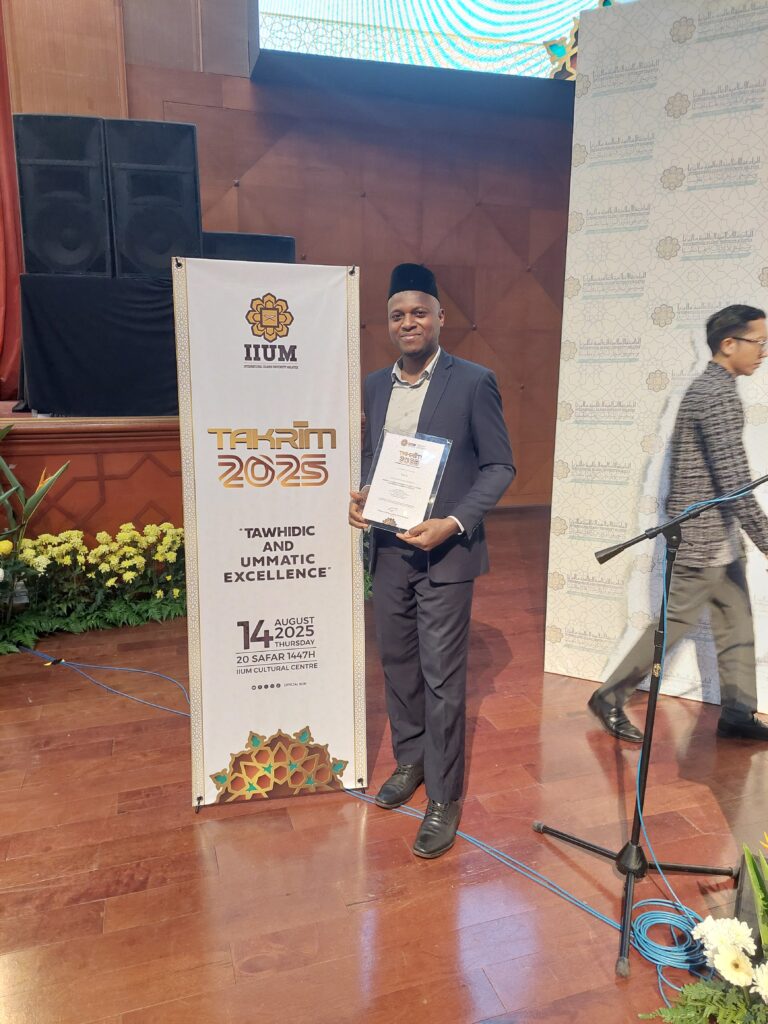
The project was recognised with the Gold Award at the Festival of Ideas 2025, organised by the Research Management Centre of the International Islamic University Malaysia (IIUM). As the founder of the solution, I regard this achievement as an important demonstration of how artificial intelligence can be designed not only to advance technological capability but also to address pressing societal challenges through ethical, culturally sensitive, and human-centred innovation.
Looking ahead, I aspire to contribute to innovation ecosystems that foster responsible artificial intelligence, digital entrepreneurship, technology commercialisation, and knowledge-based economic development. My long-term objective is to support the creation of intelligent technologies that are scientifically rigorous, commercially sustainable, ethically responsible, and socially beneficial.
Core Expertise
My professional expertise spans several interconnected domains that collectively support intelligent digital transformation and research-driven innovation:
- Artificial Intelligence & Intelligent Systems
Designing and applying AI, machine learning, deep learning, computer vision, intelligent automation, explainable AI, and decision-support systems to solve complex challenges across healthcare, education, enterprise, and public-sector environments.
- Medical Imaging & Healthcare AI
Developing robust deep learning models for medical image analysis, anatomical segmentation, optimization under limited-data conditions, and clinically trustworthy AI systems that support healthcare professionals in diagnostic decision-making.
- Cybersecurity & Digital Trust
Leading initiatives in cybersecurity governance, information security, risk management, digital resilience, security architecture, and organizational cyber maturity to establish secure and trustworthy digital ecosystems.
- Digital Transformation & Technology Strategy
Aligning emerging technologies with organizational strategy through enterprise architecture, innovation management, technology governance, digital modernization, and executive technology leadership.
- Software Engineering & Enterprise Solutions
Designing and developing scalable enterprise software, cloud-enabled platforms, intelligent applications, automation systems, and integrated digital solutions that improve organizational performance and service delivery.
- Cloud Computing & Enterprise Infrastructure
Planning and implementing resilient cloud infrastructures, enterprise information systems, digital platforms, and scalable architectures that support operational excellence and business continuity.
- Research, Innovation & Technology Commercialisation
Advancing interdisciplinary research, technology transfer, product innovation, AI commercialization, startup ecosystems, and collaborative initiatives that bridge academic excellence with industrial impact.
- Strategic Leadership & Digital Governance
Providing executive leadership in technology strategy, organizational transformation, innovation management, governance, stakeholder engagement, and policy-oriented technology planning to ensure sustainable digital growth.
Awards, Honours & Innovation Recognition
Throughout my career, I have been honoured to receive recognition from academic institutions, professional organizations, and innovation ecosystems for contributions to artificial intelligence, cybersecurity, technology innovation, and digital transformation. These recognitions reflect not only personal achievement but also the collective impact of collaborative research, interdisciplinary innovation, and the practical application of technology to address societal and industrial challenges.
- MSA Cyber Warrior – Malaysia’s Next Generation (2026)
Conferred by Melbourne Security Associates (MSA), Malaysia, this recognition acknowledges my contributions to cybersecurity programme design and information security awareness through the successful development and presentation of the Personal Information Security Management Programme (PISMP). The award recognizes excellence in cybersecurity strategy, executive engagement, security awareness, organizational cyber resilience, and leadership in promoting information security best practices.
- Startup Induction Grant (SIG) Acceleration Grant Awardee (2026)
Awarded by the Entrepreneurship Ecosystem Development Unit, Office of the Assistant Vice-Chancellor (Industry Engagement & Enterprise Development), Universiti Brunei Darussalam, this commercialization grant was presented in recognition of the innovation and commercial potential of FEVAL-AI (Feasibility and Valuation Intelligence System). The project received the BND 3,000 Acceleration Grant during the Startup Induction Grant (SIG) Final Pitching Session, supporting the continued development of an AI-powered platform that assists entrepreneurs, investors, innovation hubs, and business advisors in evaluating business feasibility and startup valuation through intelligent decision-support.
- Gold Award – Festival of Ideas (2025)
I was honoured to receive the Gold Award at the Festival of Ideas 2025, organized by the Research Management Centre, International Islamic University Malaysia (IIUM), for developing RAHMAH: An Anonymous Mental Health Chatbot Empowered by Islamic Psychology.
As the founder of the solution, I led the conceptualization and development of an AI-driven mental health platform that integrates Islamic psychology, Cognitive Behavioural Therapy (CBT), and empathetic conversational AI to provide anonymous, accessible, and culturally contextualised emotional support for university students. The innovation demonstrates how artificial intelligence can be responsibly applied to address mental health challenges while respecting cultural values, ethical principles, and user privacy.
These recognitions reinforce my commitment to developing technologies that combine scientific rigor, practical innovation, and meaningful societal impact. They continue to inspire my work in advancing responsible artificial intelligence, strengthening cybersecurity, fostering technology commercialization, and promoting interdisciplinary collaboration between academia and industry.
Professional Credentials, Leadership & Industry Engagement
My professional journey is founded on a commitment to excellence, lifelong learning, and responsible technology leadership. Over the years, I have combined executive practice, academic research, and professional development to build expertise that spans technology strategy, enterprise architecture, artificial intelligence, cybersecurity, software engineering, digital transformation, and information technology governance.
As a Chartered Information Technology Professional and Certified ICT Consultant, I have consistently advocated for the strategic role of information technology in enabling organizational excellence, strengthening digital resilience, and driving sustainable innovation. My professional approach integrates technical expertise with governance principles, ensuring that technology investments are aligned with business objectives, regulatory expectations, risk management frameworks, and long-term organizational strategy.
My experience extends across the full spectrum of enterprise information technology leadership, including strategic technology planning, IT governance, information security governance, enterprise architecture, cloud computing, software engineering, digital transformation, intelligent automation, and operational technology management. I have led initiatives involving enterprise infrastructure modernization, secure digital ecosystems, business process optimization, technology policy development, systems integration, and organizational digital capability enhancement.
Cybersecurity remains one of the defining pillars of my professional practice. Beyond implementing technical safeguards, I focus on establishing governance frameworks that strengthen organizational resilience, cultivate security-conscious cultures, and promote responsible digital practices. My work encompasses cybersecurity governance, enterprise risk management, information assurance, security awareness, compliance, business continuity planning, disaster recovery, identity and access management, and critical infrastructure resilience. This holistic perspective recognizes that effective cybersecurity depends as much on leadership, governance, and organizational culture as it does on technology.
My contributions to cybersecurity awareness and executive education were formally recognized through the MSA Cyber Warrior – Malaysia’s Next Generation Award (2026), conferred by Melbourne Security Associates (MSA), Malaysia. The award acknowledged my leadership in designing and delivering the Personal Information Security Management Programme (PISMP), an executive-focused initiative that promotes cybersecurity awareness, information security governance, and organizational cyber resilience through practical and strategic engagement.
Throughout my career, I have also served as a trusted technology advisor, supporting organizations in evaluating emerging technologies, strengthening digital governance, modernizing enterprise systems, and developing long-term technology strategies. My consulting engagements have focused on aligning technology with organizational vision, improving operational efficiency, enhancing cybersecurity maturity, and enabling digital innovation through evidence-based planning and strategic execution.
In addition to executive leadership, I remain actively engaged with professional communities that promote excellence in information technology, cybersecurity, digital governance, and research. These affiliations provide opportunities to contribute to professional discourse, collaborate with industry leaders, support knowledge exchange, and remain informed about emerging technologies, evolving standards, and global best practices.
My professional affiliations include membership and fellowship within recognized national and international professional bodies, reflecting my commitment to maintaining the highest standards of professional practice, ethical conduct, and continuous development. These engagements reinforce my belief that leadership is strengthened through collaboration, lifelong learning, and active participation in professional communities.
Across every stage of my career, I have remained committed to integrating executive leadership with academic scholarship, professional practice, and responsible innovation. Whether advising organizational leaders, conducting advanced research, designing intelligent systems, strengthening cybersecurity governance, or leading enterprise transformation initiatives, my objective has remained consistent: to develop technology that is secure, resilient, strategically aligned, and capable of creating sustainable value for organizations and society.
Selected Professional Memberships
- Fellow, Institute of Information Management (IIM), Africa
- Registered Professional Member, Computer Professionals (Registration Council of Nigeria) (CPN)
- Professional Member, Nigeria Computer Society (NCS)
- Member, Internet Society (ISOC)
- Member, Disaster Recovery Institute International (DRII), USA
- Member, Society of Digital Information and Wireless Communications (SDIWC)
These professional affiliations reflect my ongoing commitment to advancing the fields of information technology, cybersecurity, digital governance, research, and innovation while contributing to the development of globally relevant technology practices and professional standards.
Leadership, Professional Contributions & Global Vision
Throughout my career, I have viewed leadership as the ability to inspire transformation through vision, innovation, and service. While technology continues to evolve at an unprecedented pace, its greatest value lies not in the sophistication of algorithms or digital platforms, but in its capacity to solve meaningful problems, empower people, strengthen institutions, and contribute to sustainable societal progress. This philosophy has guided every stage of my professional journey, influencing how I lead organizations, conduct research, develop technologies, and collaborate across disciplines.
As both an executive leader and researcher, I strive to cultivate environments where innovation is purposeful, ethical, and inclusive. Effective leadership extends beyond managing technology—it involves building trust, empowering teams, encouraging continuous learning, and fostering collaboration among academia, industry, government, and the wider community. I believe that the most significant technological breakthroughs emerge when diverse expertise converges around shared challenges and a common vision for the future.
My professional contributions have consistently focused on bridging the gap between research excellence and industrial practice. Whether designing enterprise technology strategies, leading digital transformation initiatives, advancing artificial intelligence research, developing intelligent software platforms, or mentoring emerging professionals, my objective has remained the same: to ensure that innovation creates measurable and lasting value.
I am particularly passionate about interdisciplinary collaboration. Many of today’s global challenges—including healthcare accessibility, cybersecurity resilience, digital education, sustainable economic development, and trustworthy artificial intelligence—cannot be solved by a single discipline or institution. They require collaborative ecosystems where researchers, engineers, policymakers, entrepreneurs, healthcare professionals, educators, and industry leaders work together to co-create innovative and responsible solutions.
This belief has shaped my commitment to research partnerships, innovation ecosystems, and international collaboration. I actively seek opportunities to contribute to multidisciplinary projects that combine academic excellence with practical implementation, enabling scientific discoveries to influence industry, public policy, and societal development. Such collaborations not only accelerate innovation but also ensure that technological progress remains relevant, inclusive, and responsive to real-world needs.
Beyond technical expertise, I remain committed to promoting responsible technology leadership. Artificial intelligence, cybersecurity, cloud computing, and digital transformation are reshaping every aspect of society, presenting extraordinary opportunities alongside significant ethical, legal, and governance challenges. As these technologies become increasingly integrated into healthcare, education, finance, government, and critical infrastructure, leadership must prioritize transparency, accountability, fairness, privacy, and security. Responsible innovation is not an optional consideration—it is a prerequisite for building public trust and ensuring that technological advancement benefits society as a whole.
Looking ahead, my long-term vision is to contribute to the global advancement of trustworthy artificial intelligence, secure digital ecosystems, and research-driven innovation. I aspire to play a meaningful role in shaping the future of intelligent technologies that are not only technically advanced but also ethically grounded, explainable, resilient, and accessible. Through interdisciplinary research, executive leadership, technology strategy, and international collaboration, I seek to help build digital ecosystems that enhance healthcare, strengthen education, support evidence-based governance, accelerate business innovation, and contribute to sustainable national and global development.
I am equally committed to strengthening the connection between universities, research institutions, industry, and government. Bridging these sectors is essential for transforming scientific discoveries into practical innovations, commercial technologies, and informed public policies. By fostering stronger collaboration across these domains, we can accelerate the translation of knowledge into solutions that address complex societal challenges while supporting economic growth and technological competitiveness.
As technology continues to redefine the future of work, education, healthcare, and governance, I believe leaders have a responsibility to ensure that innovation remains human-centred. The success of digital transformation should not be measured solely by technological advancement but by its ability to improve lives, expand opportunities, strengthen communities, and create a more equitable and sustainable future.
My aspiration is not simply to contribute to the next generation of technologies, but to contribute to the next generation of ideas, leaders, and innovations that will shape our digital society. Through continuous learning, research excellence, strategic leadership, and meaningful collaboration, I remain committed to advancing knowledge, driving innovation, and building intelligent solutions that create lasting impact across industries, institutions, and communities.
Technology will continue to evolve, but its true legacy will always be measured by the value it creates for humanity. That conviction continues to guide my work, inspire my research, and define my commitment to building a future where innovation is secure, responsible, inclusive, and transformative.
“Innovation achieves its greatest purpose when knowledge becomes action, technology serves humanity, and leadership inspires meaningful change.”
C.itp ANJORIN, Ishaq O. Muhsin FIIM, MCPN, MNCS, ABCP