
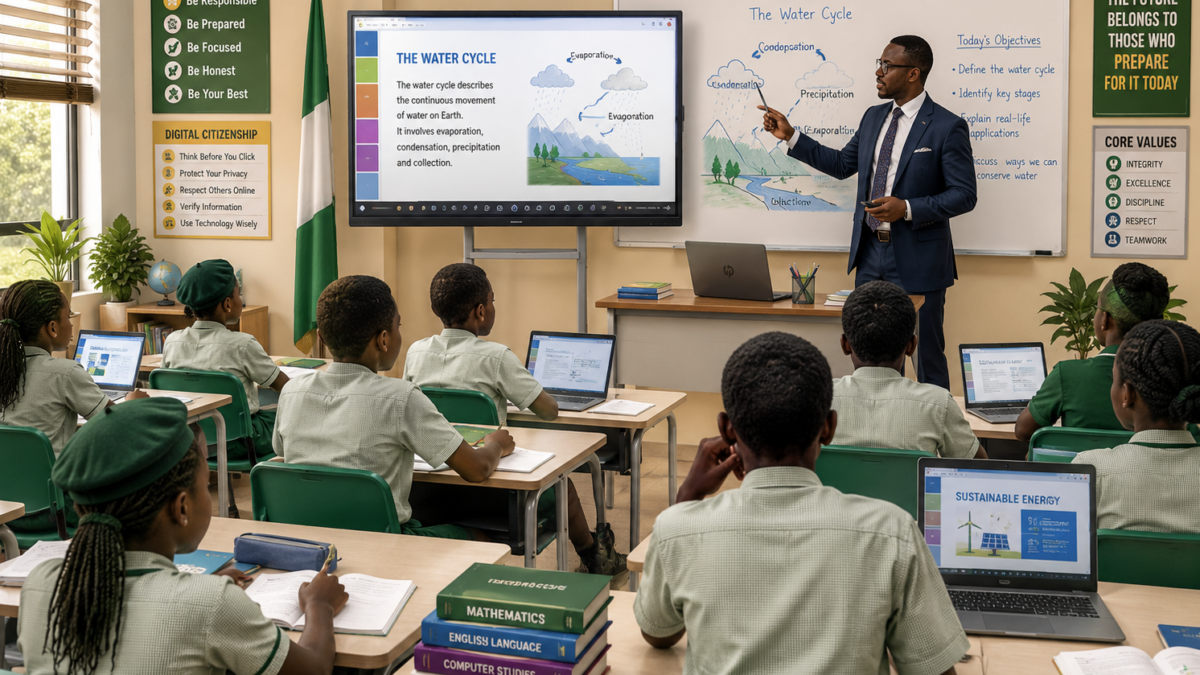
When Sweden announced that it would reduce the use of digital devices in schools and restore printed textbooks, handwriting, and teacher-led instruction, many around the world interpreted the decision as a retreat from technology.
Sweden is not rejecting digital transformation. It is redefining it. Its decision has ignited a global conversation that extends far beyond classrooms and reaches into one of the most important questions of our generation:
How do we prepare children for a digital future without sacrificing the human qualities that make societies thrive?
For Africa—and particularly for Nigeria—this conversation is even more significant.
Across the continent, governments are investing in computing education, coding, Artificial Intelligence, robotics, cybersecurity, broadband infrastructure, smart classrooms, digital literacy, innovation hubs, and emerging technologies. These investments are essential. Africa cannot afford to be spectators in the Fourth and Fifth Industrial Revolutions.
But Sweden’s experience reminds us of a simple truth. Technology transforms very little unless people transform first. The greatest mistake any nation can make is to believe that digital transformation begins with computers. It does not. It begins with people. And people are shaped by three institutions that no technology can replace:
- Responsible Government.
- Responsible Families.
- Responsible Educators.
These three form the triangle upon which every successful education system rests. Remove one, and the structure weakens. Neglect two, and it begins to collapse. Ignore all three, and no amount of Artificial Intelligence, digital infrastructure, or smart classrooms will save it.
The First Pillar: Leadership That Parents a Nation
Too often, leadership is viewed merely as politics. It is much more than that. Leadership is national parenting. Policies educate. Education shapes values. Values shape citizens. Citizens shape nations. Every education policy adopted today becomes part of the character of tomorrow’s generation.
Sweden demonstrated what responsible leadership looks like. It listened to evidence. It evaluated outcomes. It admitted that balance was needed. And it changed direction—not because technology had failed, but because children mattered more than technological trends.
That is courageous leadership. Africa needs leaders who understand that digital transformation is not measured by the number of tablets distributed or smart classrooms commissioned. It is measured by the quality of citizens those classrooms eventually produce.
As I often remind people:
You can never outgrow your head.
No matter how strong the body becomes, it follows the direction of the head. Likewise, no nation consistently rises above the quality of its leadership.
History repeatedly shows that poor leadership can reverse decades of educational progress, weaken institutions, normalize mediocrity, undermine innovation, and erode the moral foundations of society.
- Good leadership strengthens families.
- Good leadership empowers schools.
- Good leadership creates opportunities.
Above all, good leadership creates an environment where technology becomes a tool for national development rather than a substitute for national vision.
The Second Pillar: Parents Who Build Human Intelligence Before Artificial Intelligence
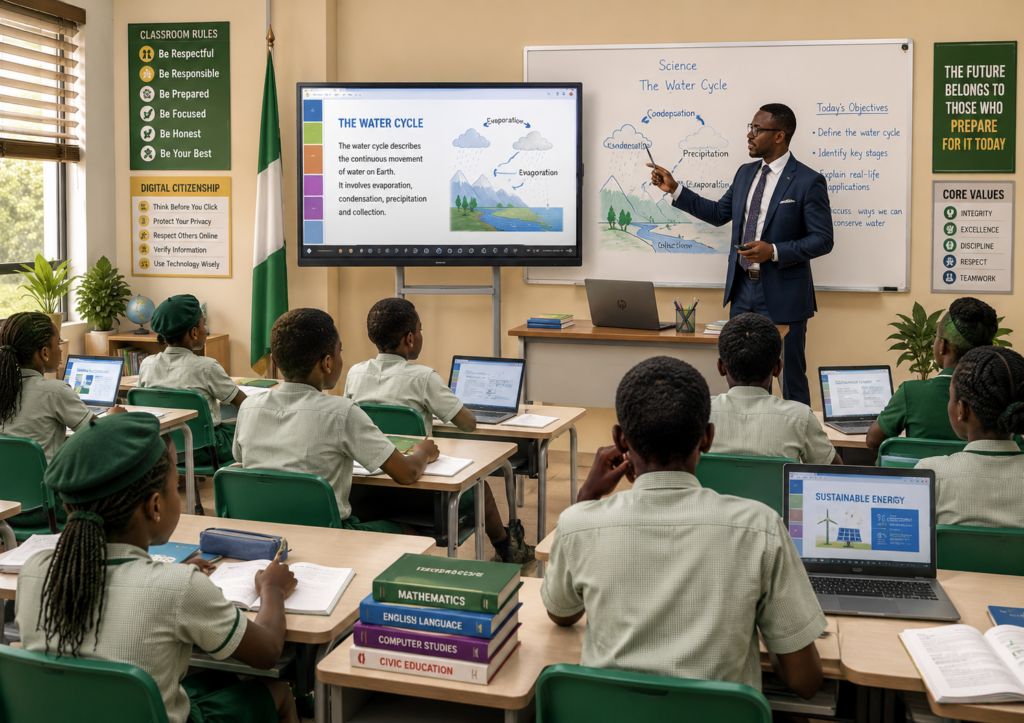
The home remains the first classroom. Before a child meets a teacher or interacts with digital technologies, the family has already begun shaping the mind. Parents lay the foundation for values, character, curiosity, and discipline. Educators build upon that foundation, while responsible leadership creates the environment in which both families and schools can flourish. Together, these three pillars determine whether technology becomes a force for human development or merely another digital distraction.
Parents therefore cannot outsource education to schools. Nor can they outsource parenting to technology. Real digital transformation begins at home. Families should encourage children to read printed books alongside digital resources. They should preserve handwriting through journals and note-taking. They should establish healthy boundaries around recreational screen time.
More importantly, they should intentionally use technology for creativity, research, coding, cybersecurity awareness, innovation, and meaningful learning—not merely for passive entertainment. Artificial Intelligence should become a learning companion. Not a thinking replacement. The purpose is not to remove technology from children’s lives. That would neither be practical nor desirable. The objective is to ensure that technology strengthens rather than weakens the habits that underpin lifelong learning.
- Curiosity.
- Reflection.
- Conversation.
- Integrity.
- Critical thinking.
- Resilience.
These remain uniquely human capacities. No algorithm can automate them.
The Third Pillar: Educators Who Teach Students to Govern Technology
Teachers occupy the frontier between knowledge and society. Their responsibility is no longer simply to transfer information. Information is everywhere. Artificial Intelligence can now answer questions in seconds. Search engines can retrieve millions of documents instantly. Educational technology has democratized access to knowledge.
Yet access is not understanding. Knowing is not wisdom. Technology therefore should never replace teachers. It should amplify them. Artificial Intelligence should enhance instruction—not replace instruction. Computing should expand creativity—not diminish imagination. Cybersecurity education should produce ethical digital citizens—not merely skilled technicians.
Digital education should not simply teach students how to use technology. It must teach them how to think with technology, question technology, secure technology, govern technology, and innovate responsibly through technology. Because tomorrow’s leaders will not merely consume digital technologies.
- They will create them.
- Regulate them.
- Secure them.
- Improve them.
And they will need wisdom as much as technical expertise.
The Real Meaning of Digital Transformation
Sweden has given the world more than a change in classroom policy. It has challenged one of the greatest misconceptions of the digital era. Real digital transformation is not about putting more technology into classrooms. It is about using technology to augment human intelligence rather than replace it.
Technology is an enabler. It is not the purpose of education. Education exists to develop human intelligence. Technology exists to support that mission. As nations continue investing in Artificial Intelligence, computing education, cybersecurity capacity, smart classrooms, cloud infrastructure, digital inclusion, and emerging technologies, they must never forget this distinction.
The real question is no longer whether digital technologies belong in schools. They certainly do. The real question is whether our education systems are producing graduates who merely know how to operate technology—or graduates who possess the wisdom, ethics, creativity, resilience, critical thinking, and leadership required to shape the digital world responsibly. That distinction will define the future of education.
And ultimately, the future of civilization. Sweden has started the conversation. Nigeria and by extension Africa now has an opportunity to lead the next chapter. Not by rejecting technology. Not by blindly embracing it. But by building an education system where responsible governments, responsible parents, and responsible educators work together to develop responsible citizens.
The future of education in Africa does not depend on technology alone. It depends on a three-way partnership between Responsible Leadership, Responsible Parenting, and Responsible Education.
Because in the end, the future will not belong to nations that simply digitize their classrooms.
It will belong to nations whose leaders understand that the greatest technology a nation can ever develop is the human mind. And the greatest responsibility of leadership is to protect, nurture, and develop that mind for generations yet unborn. Because the strength of a nation is never determined by the sophistication of its technology alone. It is determined by the wisdom of its leadership, the commitment of its parents, and the dedication of its educators.
That is the lesson Sweden has offered.
That is the lesson Nigeria—and indeed Africa—must embrace.
Not tomorrow.
Today.
